
One App for the Whole Workday: Introducing WorkCafe
Whether you run the building or the hybrid workforce inside it, WorkCafe puts the whole workday in one place
The workday stopped fitting inside a single building somewhere around 2020, and most companies have long since made their peace with that. Leases have been resized around a hybrid week, and desk-to-headcount ratios rewritten to match. The square footage debate has largely settled.
The tooling, meanwhile, is still catching up. Booking, visitors, service requests and access still live in separate systems, which leaves tenants with four logins, three portals, and a standing habit of giving up and emailing the property manager directly.
WorkCafe closes that gap. It’s a workplace experience platform that pulls booking, visitors, events, service requests, and access into one app, serving both the people who use a space and the teams who run it.
Two Editions, One Core App
WorkCafe comes in two forms, shaped around who is administering the space.
WorkCafe for Buildings is for owners and operators who want a better day-to-day experience for their tenants, delivered under their own brand.
WorkCafe for Teams is for companies with distributed and hybrid workforces that need a single system of record for where work happens.
Both run on the same core app, which means everything below applies to either edition. What shifts is who holds the admin controls and which numbers they’re watching.
What the App Does
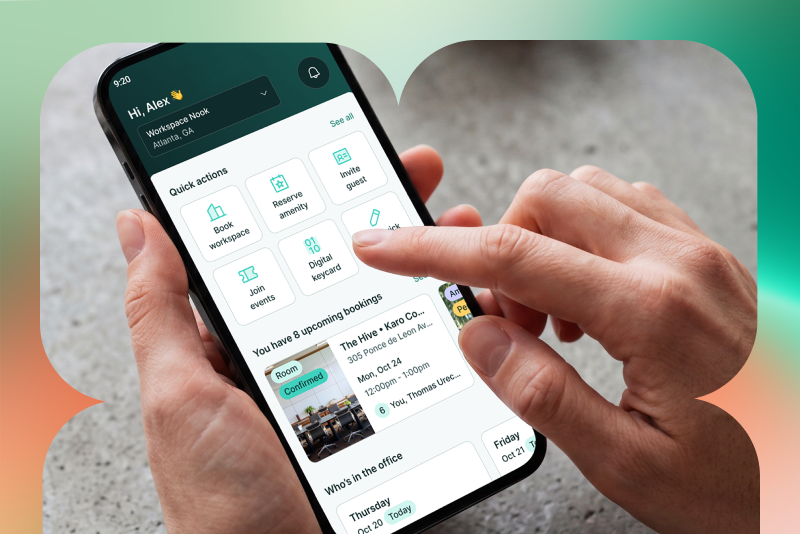
WorkCafe is the single destination for everything tied to the workday. Book a desk, reserve a room or an amenity, invite a guest, submit a service request, keep up with what’s happening in the building or across the company. No separate logins, no hunting for the right portal—one experience, on the web or in your pocket.
Desk booking: Claiming a spot before heading in
WorkCafe centralizes desk, room, and office booking across the locations a company already controls. Employees reserve space at their own HQ or at any approved company site, pull up floor plans, and check who else is coming in that day—which, in practice, is what drives attendance more reliably than any mandate. Admins set up who can book what. The result is one simple way to claim a spot before heading in.
Coworking Booking: Extending the Network Past Company Walls
For distributed and hybrid teams, booking reaches well beyond the corporate portfolio. Employees tap into a network of vetted coworking spaces around the world and reserve a desk, a room, or a day pass through the same flow they use for the office. Someone working from a city they’ve never visited can land a quality workspace in a few taps. Companies decide which locations are in scope and every booking stays inside the same policies and budgets that govern the rest of the portfolio.
Amenity Booking: Putting the Property’s Best Features to Work
Once people are in the building, WorkCafe lets them reserve what the property actually offers: conference rooms, lounges, a golf simulator, rooftop. The building staff, however, set the rules. Some amenities stay open to everyone, others require approval or carry a charge and work cafe handles both without leaving the app. Notably, this is also where owners tend to see the clearest usage data on amenities they’ve already paid to build.
Visitor Management: A Front Desk That’s Never Caught Off Guard
Work rarely happens alone. Hosts pre-register guests ahead of time, visitors get a clean check-in when they arrive, and the building keeps an accurate record of who came and went. Visitor flows reach building staff automatically, so the lobby knows about the 20-person client meeting before it walks through the door. For teams, the same tools cover guests at HQ.
Access Control: From Booking a Space to Getting Into It
With a space booked and guests invited, the next step is getting through the door. Guests can be checked in and identified with QR codes through Concierge, the staff side of WorkCafe. The app also stores digital keys, so employees and visitors reach the spaces they need without juggling badges or queuing at the front desk. Booking and entry become one continuous experience.
Events and Community: The Part That Drives Adoption
WorkCafe pulls building events, company updates, and community moments into a single feed, where people RSVP to what’s happening around them and keep up with announcements in one place—no more forwarded email chains and lobby flyers.
Service Tickets: Requests That Route Themselves
When something needs attention, people report it straight from the app and WorkCafe routes it. Common area requests go directly to facilities. Requests tied to a leased suite route to the tenant admin for approval first, then on to facilities. Everyone can see status along the way, so nothing disappears into a black hole and nobody has to chase an update by phone.
WorkCafe for Buildings: Your Brand, Your Building, Your Operating Experience
For owners and operators, WorkCafe is how tenants experience the building day to day. They book amenities, invite guests, submit requests, and follow what’s happening, all inside an app that carries your brand. Your staff run the whole thing from Concierge, the operations console sitting behind the app.
Here’s what sets it apart. WorkCafe for Buildings is built natively on Yardi Voyager—it doesn’t sit on top of your property management system through middleware or a nightly sync, it runs inside it, on a single database. The app reflects live lease, financial, and operational data with no lag and no patchwork of integrations to maintain. No other tenant experience platform can make that claim, because no other platform is built where the data already lives.
The payoff is straightforward. A great building deserves an operating experience to match, and WorkCafe delivers that without standing up another disconnected system alongside the ones you already maintain. What’s more, the rollout doesn’t have to be all at once. Plenty of owners start with amenity booking, prove out adoption with a real usage number, and grow into full tenant engagement from there.
WorkCafe for Teams: One System of Record for Distributed Work
For companies with distributed and hybrid workforces, WorkCafe becomes the system of record for where work happens—any size, any industry. If your people are spread across offices, homes, and cities, WorkCafe brings their workspace into one place.
Employees book a desk or room at HQ, reserve space at another company office, or tap into that global network of vetted coworking spaces. Admins set budgets, define policies, and decide who can book what. Every booking rolls up into reporting that shows how space gets used and what it costs—the figure that tends to matter most when a lease renewal lands on the calendar and someone has to justify the footprint.
Visitor management covers guests at HQ, and the platform connects to the tools teams already run on, including SSO, HRIS, calendars, Slack, and Microsoft Teams. At the same time, WorkCafe for Teams is backed by Yardi, so the network access, the spend controls, and the analytics all sit on infrastructure built for managing real estate at scale. Companies get flexibility for their people and visibility for their finance and operations leaders, in one platform rather than five.
Building a Better Workplace Experience
WorkCafe brings the parts of the workday that usually live in separate tools into a single app. Owners can give tenants a more connected experience under their own brand. Companies can manage workspace for distributed teams without assembling a stack to do it. Same core product, two editions, each shaped around how that group does the work.
The distributed workday appears to be here for good. WorkCafe is the tool that’s built for it.

Andreea Neculae
View more from
Andreea