

Built Inside Voyager: How WorkCafe Brings Tenant Experience and Operations Together
WorkCafe for Buildings is a single platform that unifies tenant experience, building operations, and Yardi Voyager accounting without middleware or manual reconciliation.
Most commercial buildings are running three separate tools that were never designed to work together. One typically handles the stuff tenants see and touch: bookings, events, announcements. Another manages the unglamorous machinery that keeps a building running: work orders, visitor logs, package tracking. A third lives in accounting, where the revenue from amenity bookings eventually needs to land (usually after someone has manually keyed it in from somewhere else). Many times these systems don’t talk to each other in any reliable way, so moving data eats up hours every day, often for several people.
WorkCafe for Buildings replaces that entire setup with a single platform covering tenant experience, building operations, and native Yardi Voyager accounting integration, without middleware, custom syncing, or the API fragility that comes with stitching three vendors together and hoping they all stay compatible.
Where disconnected systems cost you money
Tenant experience platforms like HqO and VTS Activate cover the engagement side, and operations platforms like Angus and Cove handle facilities and work orders, but ask either one to do the other’s job and you hit limits fast. When a tenant books a conference room through an experience app, that booking must get rekeyed into the ops system so facilities knows the room is occupied, and the charge has to be manually entered into accounting, so the revenue posts to the right ledger. That’s three steps where one should do (and three places for something to go wrong).
Amenity revenue that never reconciles cleanly in core accounting tends to get underreported because the reconciliation process depends on people catching things across disconnected systems. When your utilization data lives in a different tool from your financial data, you end up making portfolio decisions on partial data. You can see what spaces cost to run, but you have no easy way to tell whether the tenants filling those spaces are your most valuable long-term relationships or the ones with leases expiring soon.
What WorkCafe for Buildings covers
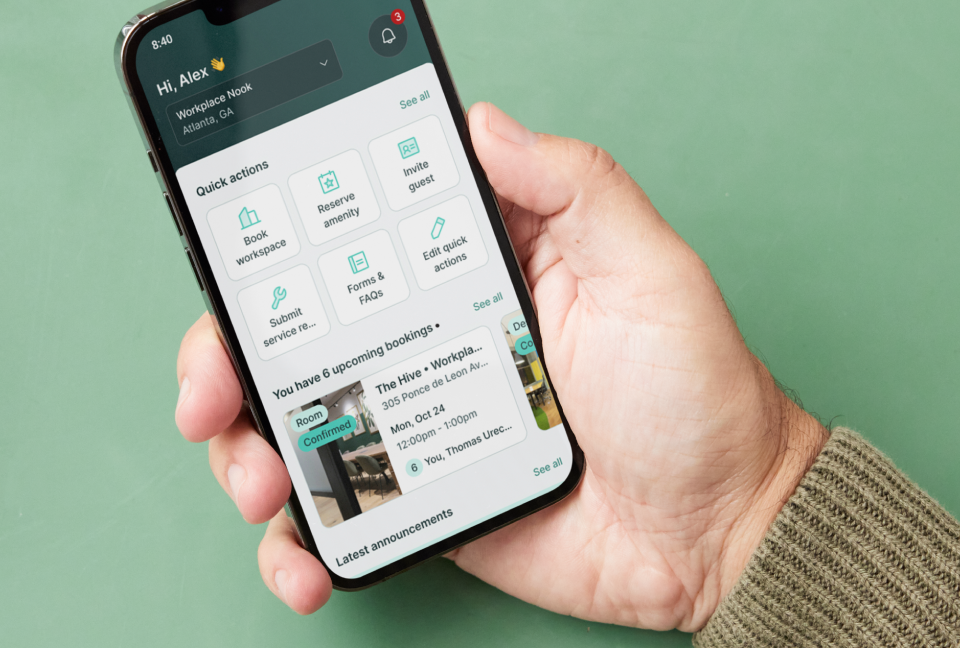
The platform has two distinct interfaces. WorkCafe serves as the tenant-facing app, white-labeled to your building’s brand and available on both mobile and web. Tenants use it to book desks, conference rooms, and amenities like parking, EV charging, gym access, and event space, without calling the front desk or sending an email. They pre-register visitors, submit service requests, see building announcements, and sign up for events, all from one place that carries your building’s name rather than a third-party product’s.
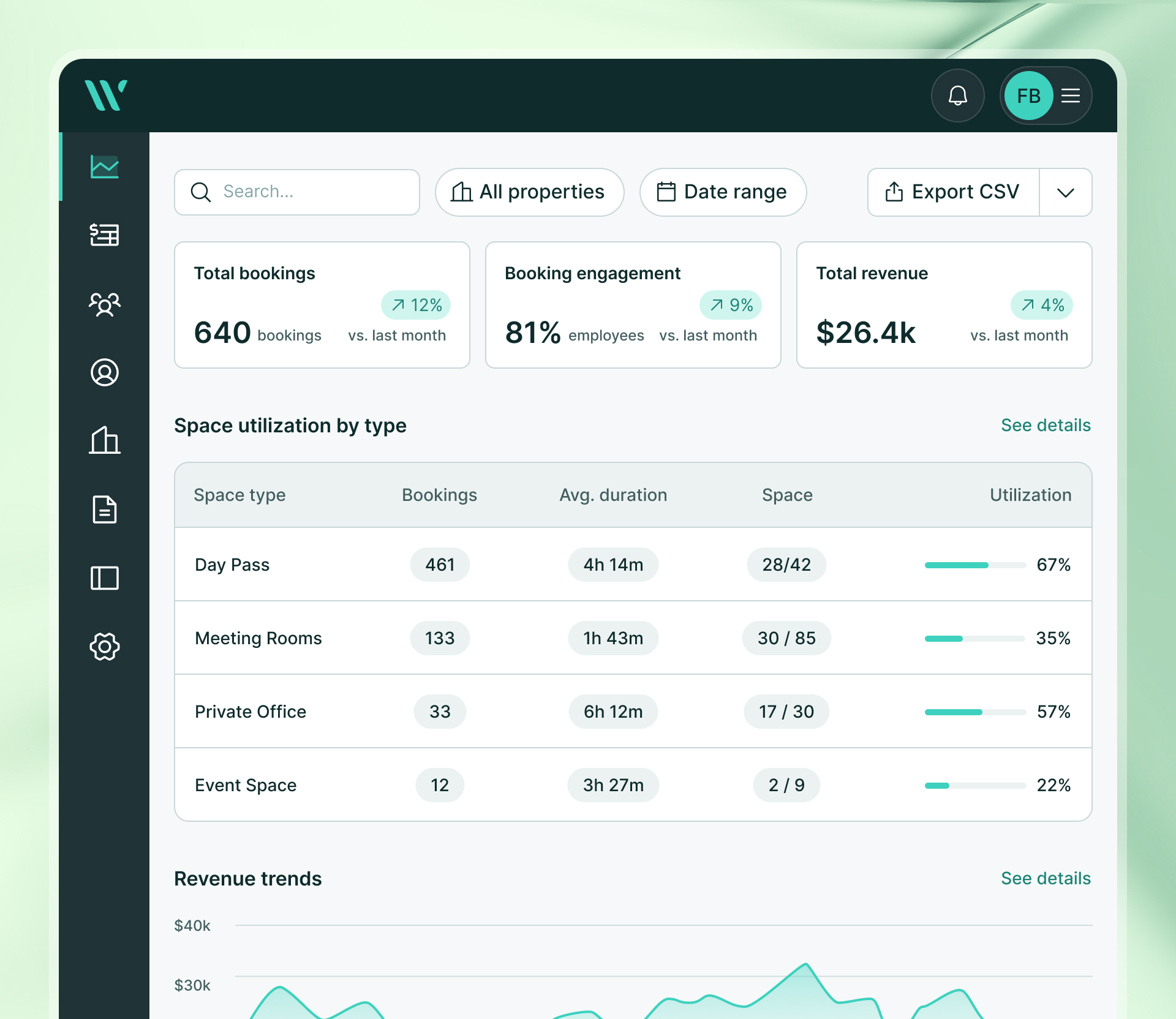
Building Manager serves as the operations dashboard your team works from, covering visitor management, package tracking, amenity booking calendars, event publishing, and service ticketing that routes directly into Facility Manager, all in a single view running on live Voyager data. There are no exports to run and no manual reconciliation steps, because what happens in the tenant app surfaces immediately on the operations side.
The third layer is Voyager itself, which already holds every tenant record, every lease, and every financial transaction in your portfolio. Because WorkCafe was built inside Voyager rather than connected to it through an integration, amenity charges post natively and the accounting side of a booking happens automatically, not as a downstream step someone has to remember.
A single tenant record across every layer
Every tenant interaction across the platform (room bookings, service tickets, visitor pre-registrations, amenity charges, you name it) links to a single tenant record shared across all three layers. When you pull a utilization report, you’re looking at the same tenant you see in your financial and lease data. No need to pull three separate exports to answer basic questions like who’s actually using the rooftop lounge, whether they’re up for renewal, what their ticket volume looks like, and what they’ve spent on bookings this year.
This is also where WorkCafe separates from both competitor categories. Experience apps don’t touch operations or accounting. Operations platforms treat tenant-facing features as secondary. WorkCafe covers both sides, and the native accounting integration means no one else is doing what the unified tenant record makes possible.
What’s live now, and what’s on the roadmap
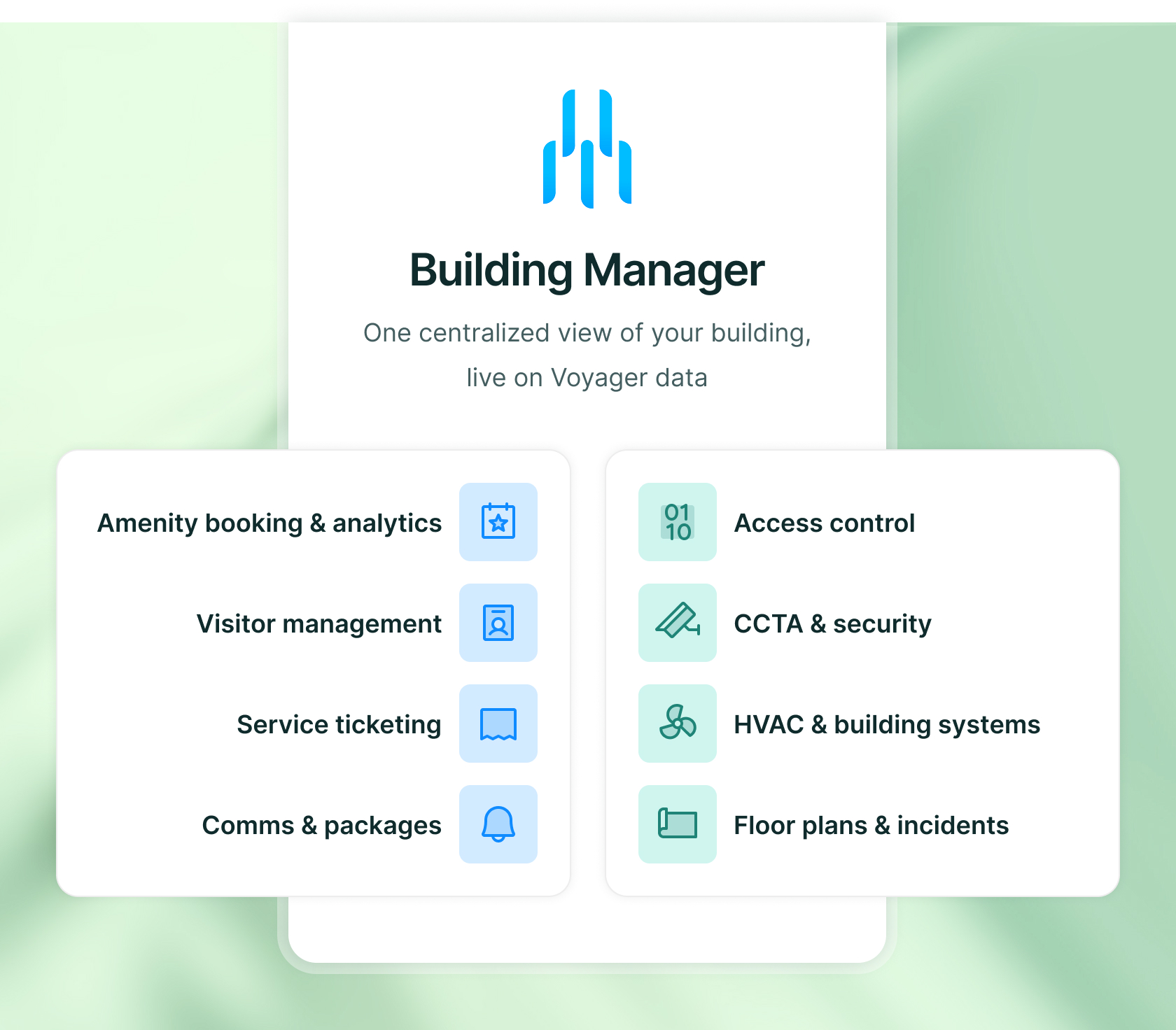
The current platform handles amenity booking and analytics, visitor management with pre-registration and passes, service ticketing routed into Facility Manager, and building communications covering announcements and package management.
The roadmap extends into access control via QR codes and Apple Wallet entry, CCTV and security oversight in a unified view, HVAC and building systems connectivity, and floor plan views that let you locate incidents visually on the building layout. The goal is a complete operational picture of your building, covering not just the experience layer tenants interact with but the physical infrastructure running underneath it.
External space booking, inside the same platform
For portfolio managers and HR teams overseeing distributed workforces, WorkCafe also connects to a network of more than 3,000 instantly bookable coworking spaces outside your own buildings. When an employee in Austin needs a desk in Chicago for two days, they don’t need to call a broker, search a separate platform, or expense it later. They book through the same WorkCafe app they use in your building, from a pre-approved inventory of external locations, and the spend flows back into the same centralized reporting that covers internal bookings. Your owned footprint and the external flex space your team uses when traveling become a single reporting line rather than two separate budget categories that have to be manually combined at the end of the month.
WorkCafe for Buildings is available now as part of the Yardi ecosystem. To see a demo or learn how it fits your portfolio, contact the WorkCafe team.

Nicusor Ciorba
View more from
Nicusor
